A major aspect of the rov has changed over the past couple of weeks. I wasn’t quite satisfied with Determination’s frame because there were some layout and access issues regarding the water tight containers. I contemplated just building a new PVC frame from scratch. Despite the extra time necessary I think building a frame specifically for these containers is the best option. I completed that new frame today, and while it ended up being a little bigger than I anticipated, I think it will work just fine. Due to the higher cost of aluminum this frame is made out of PVC, unlike my original design.

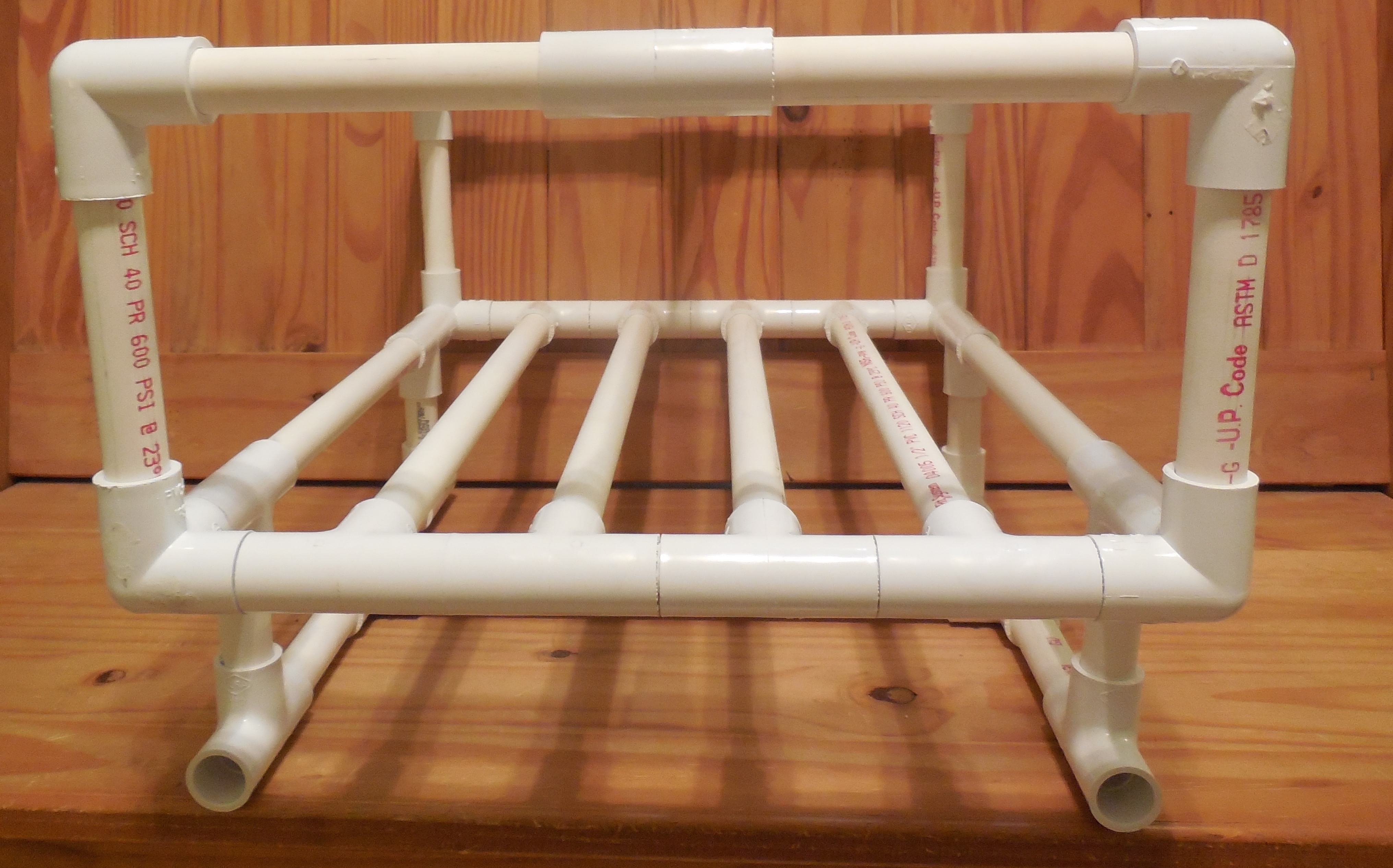

This main benefit of this new frame is that part of the electronics wiring will be simpler. With Determination’s frame whenever something in the water tight container needed to be serviced the tube would stay in place while the electronics sled would be fully removed. This meant that some sort of connector would be needed, as the wires from the rear end cap would have to be disconnected from the electronics. With this new frame design the acrylic tube and front end cap will pull away, leaving the electronics tray and rear end cap in place. This means that a connector isn’t needed between the end cap wiring and sled which greatly simplifies things.
I also now have a solid idea of how the electronics will be located and secured in the containers. One container will be the “electronics tube” and the other will be the “battery tube”. The electronics container will house the Raspberry Pi, Propeller chip, four motor controllers, and some other components. The battery container will house a 3S 5200 mAh LiPo battery (perhaps two if necessary), a low-voltage alarm, fuse, two motor controllers, and probably voltage regulators for the lights, amongst other things. I’m not sure yet which container will house the tether communication system though. In each container a flat, horizontal piece of Lexan will hold everything in place.
Over the last couple of weeks I have also been working on the software. Nothing major yet, mostly planning, design, and writing some skeleton code. I have also been learning how to use Git and Github. Along with the software I have been focusing on the documentation, specifically what program and file-type will be used to create and publish the technical report and user guide. I am leaning toward markdown for the bulk of the report. Probably each section would have its own markdown file. As part of the publishing process a script could combine the markdown files together, convert that to pdf or odt (possibly using Pandoc), and any other elements that markdown doesn’t support could then be added in (such as the parts list table). Since markdown is plaintext it will work will with Git and can be edited on any system using a simple text editor. The major downside is that markdown doesn’t support fancy layouts.
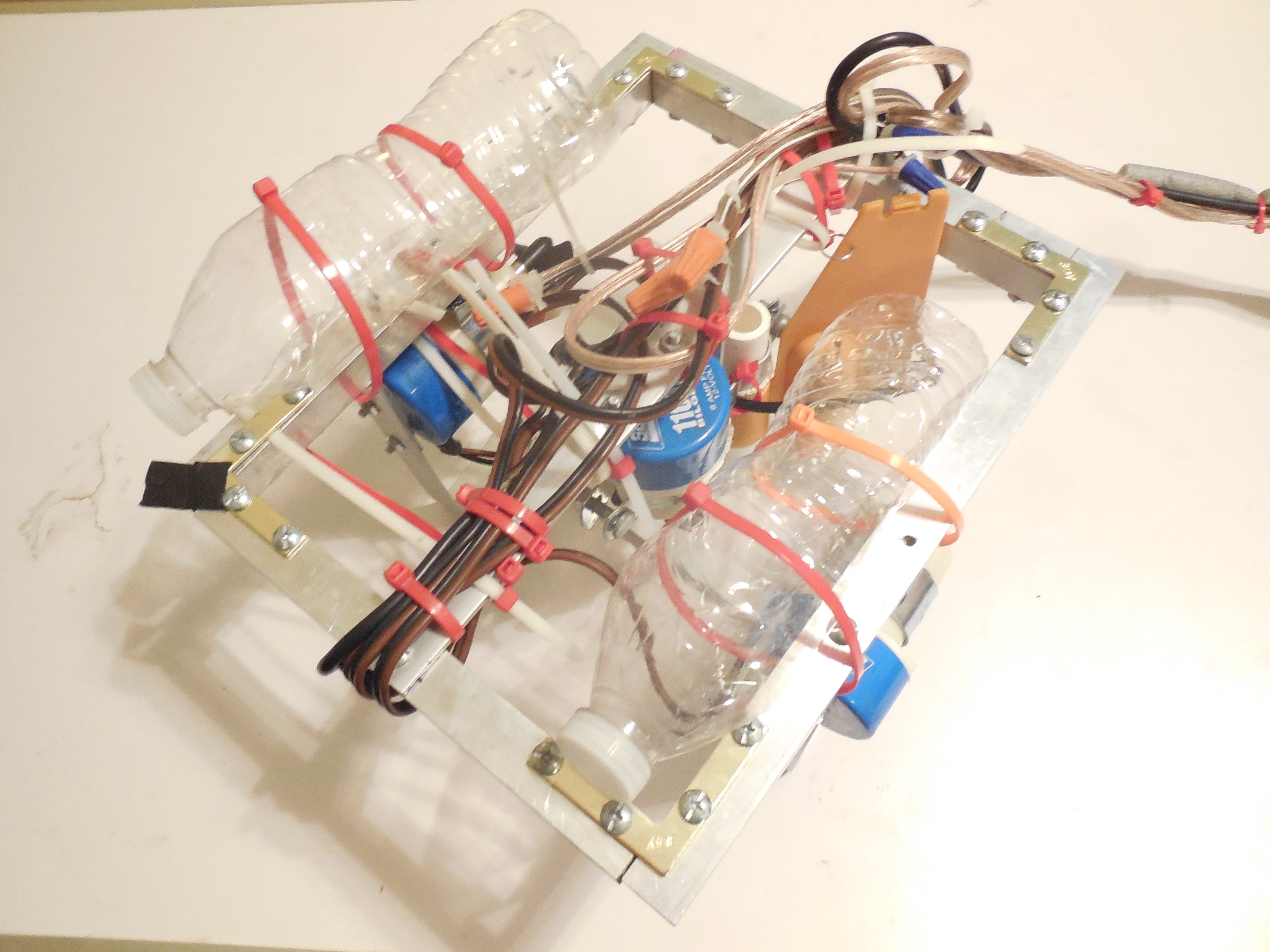
The first major setback occurred last week. It seems as though some water may have leaked into four of the thrusters I was planning on using. These motors are from a project from a few years ago. There is a grey discoloration on the inside of the motor housing. They all run, surprisingly, but they don’t sound very good. In fact, the shaft on one wouldn’t even turn a full revolution at first. I am going to take apart one of the damaged motors to get a better idea of what the problem is. Unfortunately all this means I will have to buy several more bilge pumps and convert them into thrusters.

 ROV Adventures